How Seated Jurors Influence Trial Strategy: Using Selection Data After the Box Is Set
By David R. Drwencke · · 9 min read
The Direct Answer
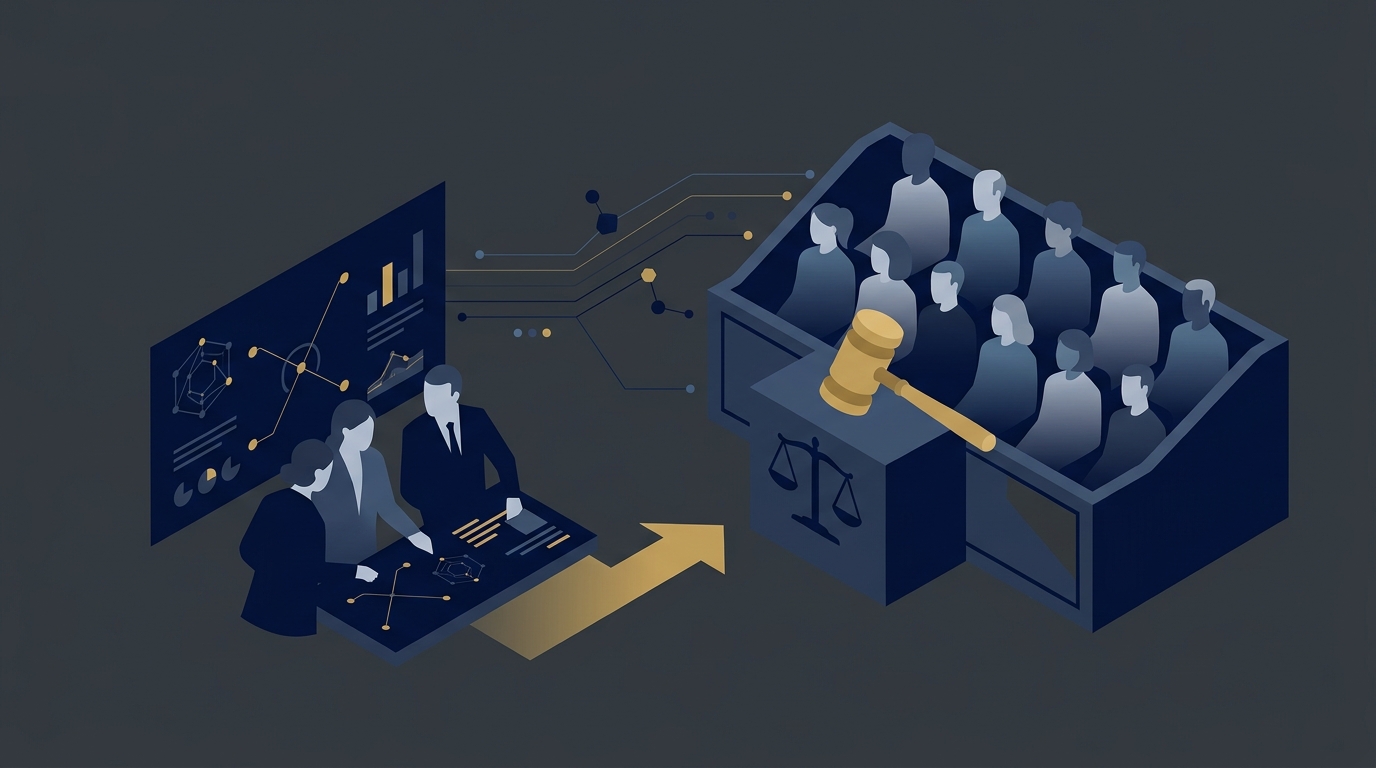
Once the jury is seated, trial strategy should shift from selection to real-time adaptation. The seated jury's demographics, demeanor, and reactions become a live feedback system that smart trial attorneys use to calibrate opening statement themes, witness sequencing, courtroom presence, and ongoing monitoring for bias or misconduct. Voir dire is only the first data point — the panel that actually sits in the box generates new, actionable information throughout trial, and attorneys who treat jury selection data as a one-time event leave significant strategic value on the table.
This isn't just intuition. Empirical research on seated-jury composition confirms that who ends up in the box measurably affects outcomes — and that skilled trial lawyers already adjust their approach accordingly, whether they represent a plaintiff, a criminal defendant, a corporation, or the state.
Why Seated Jurors Matter More Than the Voir Dire Snapshot
Most trial attorneys treat jury selection as a discrete event: question the panel, exercise strikes, and move on to opening statements. But the composition of the jury that remains — not the pool you started with — is what actually decides the case. That distinction matters because seated-jury composition has been shown to correlate with case outcomes in ways attorneys can and should use strategically.
A widely cited North Carolina study examined how jury race and gender composition affected conviction probability. Researchers found that the racial and gender makeup of the seated panel significantly influenced conviction rates, and that attorneys' peremptory strikes were strongly correlated with race and gender — evidence that experienced counsel already, whether consciously or not, treat composition as strategically meaningful. Similarly, a Washington state courts research paper found that seated-jury race can affect trial outcomes not only through jury deliberations but through how attorneys present evidence to that specific panel — meaning lawyers were already adjusting their presentation based on who was seated.
This research reframes jury selection as a Voir Dire Strategy question, but it also reframes trial presentation as an adaptive process. The composition data doesn't stop mattering once strikes are exhausted; it becomes the lens through which every subsequent trial decision should be filtered.
Opening Statement Framing: Calibrating to the Panel You Actually Got
Every trial attorney drafts a working outline of an opening statement before voir dire begins. But the version delivered to the jury should reflect the panel actually seated, not the panel counsel hoped for.
If jury selection data shows a panel skewing toward jurors who expressed skepticism about corporate liability, expect it to affect tone. If, in a criminal defense matter, several seated jurors indicated deference to law enforcement testimony during questioning, that becomes a data point for how forcefully to frame reasonable doubt in the opening's first two minutes.
Practical calibration points include:
- Tone: Formal and evidence-forward framing for panels skewing analytical; narrative and values-driven framing for panels that responded warmly to personal stories during voir dire.
- Vocabulary: Technical language for panels with higher education or professional backgrounds; plain-language analogies for panels that struggled with complex hypotheticals during questioning.
- Theme emphasis: If seated jurors' backgrounds suggest heightened sensitivity to a particular issue — safety, corporate accountability, government overreach — that theme should be foregrounded, not buried.
Witness Sequencing and Emphasis Based on Seated-Jury Composition
The order in which witnesses testify, and which aspects of their testimony get emphasized, should not be static across every trial. It should respond to what the seated panel signals about its likely priorities.
Plaintiff's Perspective
Plaintiff's counsel facing a panel that appears skeptical of damages claims may choose to front-load a credible, sympathetic fact witness before introducing an expert on damages calculations — building emotional credibility before financial specifics.
Criminal Defense Perspective
Defense counsel seated with jurors who displayed strong pro-prosecution leanings during questioning may prioritize cross-examination of the state's forensic or eyewitness testimony early, rather than saving credibility attacks for closing.
Corporate Defense Perspective
Corporate defendants facing a panel with several jurors who expressed distrust of large companies may sequence witnesses to foreground a relatable corporate representative early, addressing "reptile theory" safety narratives before plaintiff's counsel can fully exploit them.
Prosecution Perspective
Prosecutors seated with a panel showing higher analytical tendencies may lead with methodical, chronological fact witnesses rather than emotionally charged victim testimony, matching the panel's apparent preference for structured proof over narrative persuasion.
In each scenario, the underlying data source is the same: composition and observed reaction patterns from voir dire and early trial days, applied continuously rather than treated as exhausted after strikes are used.
Demeanor Management: What Jurors Actually Notice
A persistent debate among trial consultants concerns whether physical proximity to the jury box changes verdicts. Some practitioner commentary argues that closer physical proximity increases juror identification with a party or witness. Other experienced trial consultants counter that demeanor — not distance — drives impact.
This tension is genuinely useful for practicing attorneys, because it points toward the safer, evidence-supported conclusion: seated jurors notice nonverbal cues, sustained attention, and emotional control far more reliably than they notice where counsel is standing. A visibly disengaged client, a lawyer who appears irritated during cross-examination, or a witness who won't make eye contact registers with jurors regardless of physical positioning in the courtroom.
Practical demeanor management includes:
- Coaching clients on sustained, appropriate eye contact and controlled reactions during adverse testimony
- Monitoring counsel table for visible frustration, eye-rolling, or disengagement — jurors watch attorneys constantly, not just witnesses
- Debriefing daily on which jurors appeared attentive, skeptical, or disengaged, and adjusting the next day's presentation accordingly
Continuous Juror Monitoring Throughout Trial
Voir dire answers are a snapshot. Trial is a multi-day (sometimes multi-week) process during which seated jurors' attitudes can shift, external information can reach them, or previously undisclosed bias can surface. Practice guides increasingly recommend continuous monitoring of seated jurors' reactions as a standard part of trial strategy, not an occasional afterthought.
In high-profile matters, this monitoring extends to social media. Jurors have been found discussing cases, researching parties, or revealing bias online during active trials — conduct that can constitute juror misconduct. Counsel in high-visibility cases should build social media monitoring into their trial team's daily responsibilities, not treat it as optional diligence.
Motion and Mistrial Vigilance
When continuous monitoring reveals that a seated juror has been exposed to outside influence, has concealed relevant bias, or has engaged in misconduct, prompt action is essential. Waiting to raise the issue until after an unfavorable verdict risks waiver. Attorneys who build juror monitoring into daily trial routine are far better positioned to:
- Bring a timely motion to remove and replace a juror with an alternate
- Preserve the issue for appellate review if removal is denied
- Document the basis for concern with contemporaneous notes, which matters enormously if the issue is later litigated
Perspectives Across the Bar
Plaintiff's attorneys should use seated-jury data to calibrate damages narratives and emotional pacing, front-loading credibility where skepticism is detected. Criminal defense attorneys should treat seated-panel deference signals as an early warning system, adjusting cross-examination priority and reasonable-doubt framing accordingly. Corporate defense counsel should anticipate reptile-theory vulnerabilities by monitoring seated jurors for anti-corporate sentiment and sequencing corporate witnesses to preempt distrust. Prosecutors should match presentation style — analytical versus narrative — to the demonstrated tendencies of the seated panel rather than defaulting to a one-size-fits-all trial script.FAQ
Does jury selection data stop mattering once the jury is sworn in? No. While formal strike opportunities end once the jury is sworn, the composition and demeanor data gathered during selection remains directly relevant to how counsel frames openings, sequences witnesses, and manages courtroom presentation throughout trial. Is courtroom proximity to the jury actually proven to affect verdicts? The research is mixed. Some practitioner commentary suggests physical closeness increases juror identification, while other experienced trial consultants argue demeanor and visible conduct matter far more than physical distance. Attorneys should prioritize managing demeanor and nonverbal cues over positioning strategy. What should attorneys do if they discover a seated juror concealed bias mid-trial? Counsel should act promptly rather than waiting for an unfavorable verdict. This typically means bringing a timely motion to remove the juror, requesting an alternate be seated, and creating a contemporaneous record to preserve the issue for appeal if the motion is denied. Should social media monitoring of jurors be standard practice? In high-profile or high-stakes cases, yes. Jurors have been documented discussing cases or researching parties online during active trials, and building monitoring into daily trial team responsibilities helps catch misconduct before it undermines the verdict.From Selection to Strategy: Treating the Jury as an Ongoing Data Source
The core lesson from this research is straightforward: jury selection data doesn't expire when the box is set. It becomes the foundation for every strategic decision that follows — how the opening is framed, which witness goes first, how counsel and clients conduct themselves at the table, and how vigilantly the trial team watches for signs of bias or misconduct as the trial unfolds.
Attorneys who treat the seated jury as a static outcome of selection are working with half the available information. Those who treat it as a continuous feedback loop — refining presentation daily based on what the panel actually shows them — are practicing trial strategy the way the empirical research suggests it should be practiced.
Tools like StrikeList AI are increasingly helping trial teams organize and act on this kind of data — tracking seated-jury composition, demeanor notes, and reaction patterns in one place so that adjustments to strategy happen based on evidence, not guesswork, for the entire length of trial.
Frequently Asked Questions
- Does jury selection data stop mattering once the jury is sworn in?
- No. While formal strike opportunities end once the jury is sworn, the composition and demeanor data gathered during selection remains directly relevant to how counsel frames openings, sequences witnesses, and manages courtroom presentation throughout trial. Is courtroom proximity to the jury actually proven to affect verdicts? The research is mixed. Some practitioner commentary suggests physical closeness increases juror identification, while other experienced trial consultants argue demeanor and visible conduct matter far more than physical distance. Attorneys should prioriti