
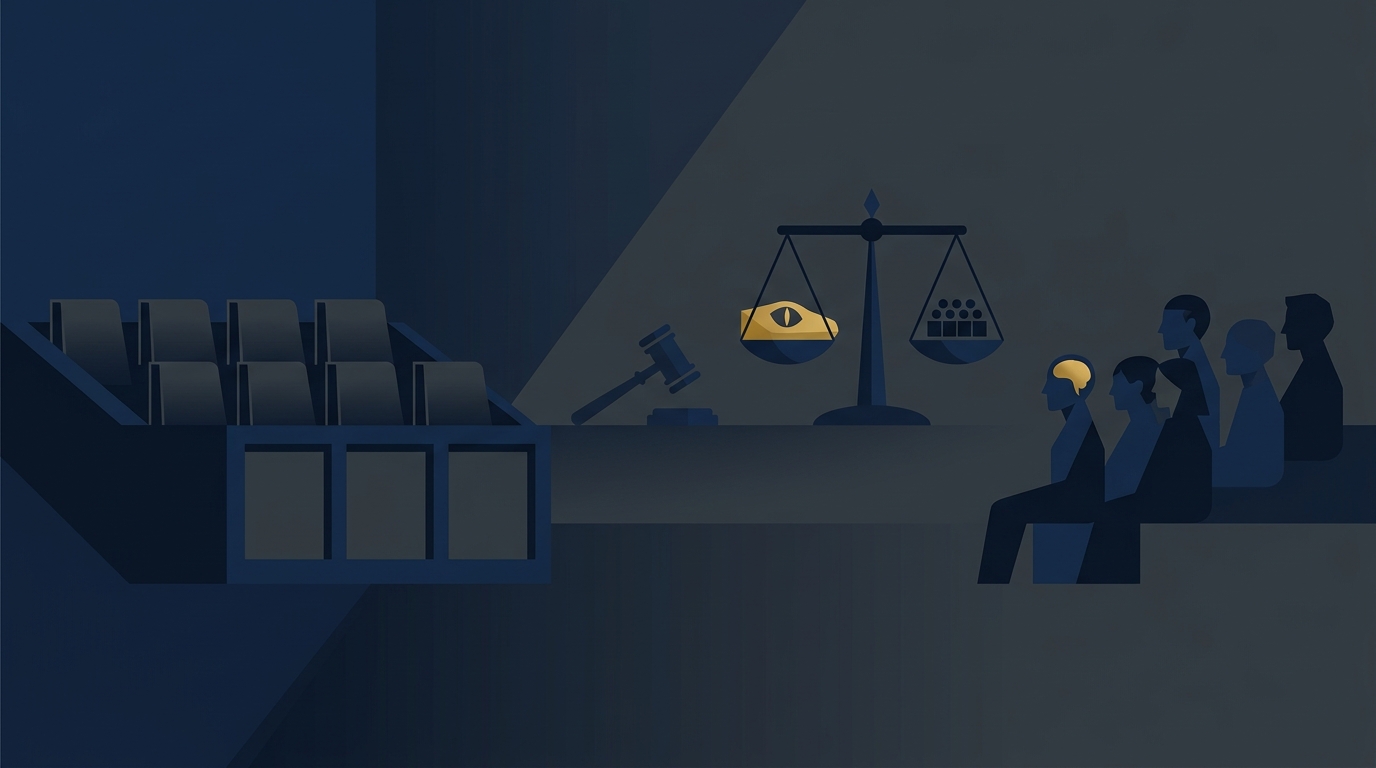
If you've prepped for a voir dire against plaintiff's counsel in the last decade, you've probably encountered Reptile theory questions—broad inquiries about safety rules, community protection, and corporate responsibility designed to activate jurors' protective instincts before they've heard a single fact about your case. The short answer to whether Reptile theory still works: yes, but not for the reason its proponents claim. The underlying neuroscience—the idea that jurors decide cases through a primitive "reptilian brain" wired for survival—has been largely discredited. But the trial tactics built around that claim, particularly safety framing, emotional priming, and community-protection themes, can still influence juror attitudes and verdict dynamics during voir dire and beyond.
That distinction matters enormously for how trial attorneys should prepare. Reptile isn't dead. It just isn't what its creators said it was.
Reptile Theory in Voir Dire: What the Science Actually Says
Reptile theory, popularized by plaintiff's attorneys David Ball and Don Keenan in their 2009 book Reptile: The 2009 Manual of the Plaintiff's Revolution, rests on a specific neurological claim: that jurors possess a primitive "reptile brain" responsible for basic survival functions, and that appealing to this brain—rather than to rational deliberation—produces larger verdicts and more favorable liability findings for plaintiffs.
The problem is that this claim doesn't hold up under scrutiny. The "triune brain" model Ball and Keenan relied on—the idea that the human brain is layered into reptilian, mammalian, and neocortical structures that operate somewhat independently—has been rejected by neuroscientists for decades as an oversimplified and outdated model of brain function. Modern neuroscience doesn't support the notion that a distinct "reptile brain" region drives juror decision-making separately from higher-order reasoning.
A widely cited analysis in the Columbia Law Review goes further, concluding there is no reliable empirical evidence that Reptile theory tactics actually increase plaintiffs' success at any stage of a tort case—not in settlement negotiations, not at trial, not on appeal. In other words, the measurable outcome data doesn't back up the strong claims made about Reptile's effectiveness.
So why does the theory persist among trial lawyers on both sides of the docket?
The Tactics Survive Even Where the Theory Fails
Here's the key insight for anyone building voir dire strategy: Reptile-style techniques can still move jurors, just not through the mechanism the theory describes. Safety framing, fear-based priming, and appeals to community protection work because they exploit ordinary, well-documented cognitive biases—not because they bypass rational thought and speak directly to a primitive brain structure.
Jurors are susceptible to anchoring effects, availability bias, and loss aversion. When plaintiff's counsel asks a panel whether "safety should always come first" or whether "rules exist to prevent harm," they're not activating a reptile brain—they're anchoring jurors to a moral framework before the evidence comes in. That's a persuasion strategy, not neuroscience. And persuasion strategies, well executed, can genuinely shift how jurors interpret ambiguous facts later in trial.
The best synthesis of the research is this: the label "Reptile theory" oversells the science, but the tactics still matter because they work on real, replicable aspects of human cognition.
How Reptile Theory in Voir Dire Plays Out by Case Type
Plaintiff's Perspective
Plaintiff's attorneys using Reptile-influenced voir dire typically open with broad, values-based questions rather than case-specific ones. Common formulations include asking jurors whether they agree that "companies have a responsibility to protect the public," or whether "rules and safety standards exist for a reason." The goal isn't to get a specific answer—it's to identify which jurors are naturally receptive to rule-based, safety-first reasoning and to begin conditioning the entire panel toward that frame before opening statements.
In product liability, transportation, and medical malpractice cases specifically, practitioner literature continues to describe these techniques as effective advocacy tools, even where the broader empirical support for "Reptile increases verdicts" remains thin. The tactic's staying power in these case types likely reflects the fact that safety and standard-of-care themes are already central to the legal theory—Reptile framing just gets there earlier and more emotionally.
Criminal Defense Perspective
Reptile-adjacent framing shows up in criminal trials too, though usually from the prosecution side rather than the defense. Prosecutors may lean on community-safety themes—asking jurors whether they believe the community deserves protection from dangerous conduct—which functions similarly to plaintiff-side safety priming in civil cases.
Criminal defense counsel countering this dynamic should watch for jurors who answer these questions in absolutist terms ("safety always comes first, no exceptions") since those jurors may struggle to apply reasonable-doubt standards or consider mitigating context. Follow-up questions probing whether jurors can distinguish between "protecting the community" and "convicting based on incomplete evidence" can help expose those who've been primed toward reflexive punitiveness.
Corporate Defense Perspective
Corporate defense counsel facing Reptile tactics in civil litigation are generally advised to do three things during voir dire: expose extremes, neutralize priming, and build a competing frame. Exposing extremes means following up on broad safety questions with more specific ones that reveal whether a juror's commitment to "safety first" is absolute or reasonable—an all-or-nothing juror on this issue is a cause-challenge candidate.
Neutralizing priming involves reframing the conversation around fairness, burden of proof, and the standard of reasonableness rather than allowing the "safety above all" frame to go unanswered. Defense counsel who simply object to Reptile questions without offering a competing frame often cede the emotional ground even if they win the objection.
Prosecution Perspective
For prosecutors, Reptile-style community-protection framing can be a legitimate and permissible way to connect jurors to the stakes of a case, provided it doesn't cross into asking jurors to prejudge guilt based on fear rather than evidence. The line prosecutors need to watch is between "the community has an interest in accountability" (permissible context-setting) and "you must convict to keep the community safe" (improper appeal to fear that could support a defense objection or even contribute to reversible error on appeal).
Building Your Voir Dire Response, Regardless of Side
Whether you're using Reptile-style tactics or defending against them, three structural principles hold up across case types:
Identify absolutist jurors early. Jurors who answer broad safety or protection questions in rigid, all-or-nothing terms are often poor fits for cases requiring nuanced application of standards like negligence, reasonable doubt, or comparative fault. These jurors are strong candidates for cause challenges, and if a cause challenge fails, they should be high on your peremptory list.
Follow every broad question with a specific one. A juror who agrees that "safety should always come first" in the abstract may answer very differently when asked whether that means punishing a defendant who followed all applicable industry standards. The gap between the abstract answer and the specific answer is where real information lives.
Build your own frame instead of only rebutting theirs. Opposing counsel's Reptile framing doesn't disappear just because you object to it or ignore it. Effective voir dire uses affirmative language—fairness, individualized facts, burden of proof, reasonableness—repeated consistently enough to give jurors an alternative lens before deliberations begin.
FAQ: Reptile Theory in Voir Dire
Is Reptile theory scientifically valid? No. The triune brain model underlying Reptile theory—the claim that a distinct "reptilian brain" region drives juror decisions independently of rational thought—has been rejected by mainstream neuroscience for decades. Legal scholarship, including analysis published in the Columbia Law Review, has found no reliable evidence that Reptile tactics increase plaintiffs' success at any stage of litigation.
If the science is discredited, why do lawyers still use Reptile tactics? Because the persuasion techniques associated with Reptile theory—safety framing, emotional priming, and community-protection appeals—work on real, well-documented cognitive biases, not because they access a primitive brain structure. The label overstates the science, but the underlying rhetorical techniques can still influence how jurors interpret evidence.
How can defense counsel counter Reptile-style voir dire questions? Common strategies include asking specific follow-up questions that expose whether a juror's stated commitment to a safety principle is absolute or reasonable, using cause challenges on jurors who reveal rigid or extreme views, and building a competing frame around fairness, burden of proof, and individualized facts rather than only objecting to the plaintiff's framing.
Does Reptile theory apply outside personal injury cases? Yes. Community-protection and safety-first framing appear in criminal trials as well, typically from the prosecution, and in employment, contract, and other civil disputes where a party wants jurors to think in terms of broad principles rather than case-specific facts. The underlying tactic is adaptable to any case type where rule-based reasoning benefits one side.
Can a juror be challenged for cause based on Reptile-influenced answers? Potentially, yes. Jurors who express rigid, absolutist views in response to safety or protection questions—views that suggest they cannot fairly apply the actual legal standard, such as reasonable doubt or comparative negligence—may be subject to a cause challenge. Success depends on how clearly the juror's answers demonstrate an inability to follow instructions, and courts vary in how they evaluate these challenges.
The Bottom Line
Reptile theory as neuroscience is dead. Reptile theory as courtroom rhetoric is still alive. Trial attorneys who dismiss the tactic entirely because the underlying science has been debunked risk being caught flat-footed by jurors who've been primed with safety-first framing before they ever hear the evidence. The better approach is treating Reptile-style questioning as what it actually is—a persuasion strategy that exploits known cognitive biases—and preparing voir dire questions, cause challenges, and competing frames accordingly.
Tools like StrikeList AI can help attorneys track juror response patterns across voir dire, flag absolutist or extreme answers that might warrant a cause challenge, and organize competing-frame strategies before jury selection begins—giving trial teams a clearer, more systematic way to respond to Reptile-influenced questioning regardless of which side of the case they're on.
See how StrikeList AI fits your next trial.
Buy a single trial and start today, or request a short demo to see the workflow on a real panel.