If a judge caps your voir dire at a handful of questions or orders questionnaire-only selection, the answer is not to compress your usual script — it is to triage. Rank every available question by legal consequence: does the answer support a challenge for cause, expose a disqualifying relationship, preserve a constitutional objection, or materially guide a peremptory strike? Ask in that order, and convert each permitted question into a branching inquiry that still builds a usable record. Lawyers who treat a time or question cap as a reason to generalize lose the specific information judges actually need to rule on cause. Lawyers who triage lose fewer challenges to a thin record.
This distinction matters because restricted voir dire is increasingly common, and the skills required to work within it are different from the skills required to run an open-ended examination. The goal under a cap is not coverage — it is sequencing.
The governing constraint on limited-question voir dire
Federal Rule of Criminal Procedure 24 permits the court to conduct voir dire itself, but it requires that counsel be allowed to ask further questions the court considers proper, or to submit proposed questions for the court to ask.[1] That language does two things at once: it confirms broad judicial control over the process, and it preserves a narrow but real channel for attorney-driven inquiry. Many state analogues track this same structure, giving trial judges wide discretion over the form of voir dire while still requiring some mechanism for counsel to reach case-specific bias.
In practice, this means three things for limited-question voir dire:
- Submit proposed questions in writing before jury selection begins, not as an oral request made panel-side.
- Identify, next to each proposed question, the specific legal issue it addresses — cause disqualification, a constitutional protection, or a case-linked bias theory. A question with no stated purpose is easier for a court to deny and harder for a reviewing court to credit later.
- When a critical question is refused, make a concise, contemporaneous record: identify the omitted subject, explain its connection to impartiality, and state the proposed question verbatim so the record shows exactly what was lost.
Courts generally afford trial judges broad discretion over the scope and method of voir dire. That discretion is not unlimited, however, where restrictions prevent counsel from adequately discovering disqualifying bias or evaluating whether a cause challenge is available. The practical lesson is not that limits are unlawful — they usually are not — but that the record you build around a denied question is what preserves the issue, not your private dissatisfaction with the ruling.
A triage hierarchy for limited-question voir dire
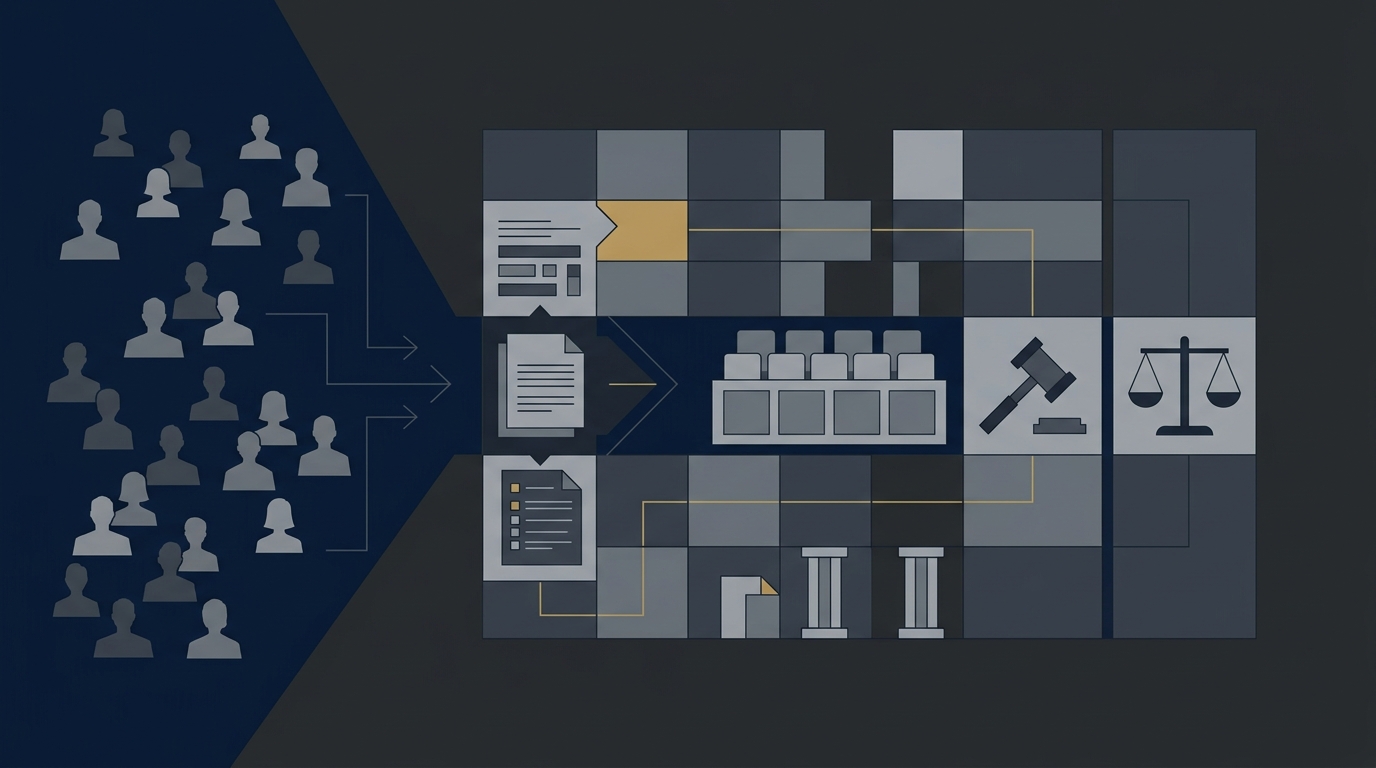
When you have five questions instead of fifty, or a judge announces a hard time cap, use this ordering to decide what survives:
- Automatic or structural disqualification. Prior service in the case, relationship to a party or witness, employment by an investigating agency, a financial interest in the outcome, or exposure to inadmissible case-specific information. These facts often resolve a challenge for cause outright and cost almost nothing to ask.
- Cause-based bias. Inability to presume innocence, follow the burden of proof, apply the law as instructed, impose or decline a legally available remedy, or remain impartial despite a stated personal experience. This is the category most likely to produce a for-cause strike that does not consume a peremptory.
- Case-linked experiential bias. Similar victimization, prior prosecution, a notable police encounter, relevant medical treatment, an analogous employment dispute, or an ideological commitment directly implicated by the evidence in this specific case — not generic life experience.
- Information affecting peremptories. Attitudes or experiences that may not rise to legal cause but materially shape how you would use a limited peremptory strike.
- Low-consequence biography. Occupation, hobbies, and demographic detail, unless a concrete case theory ties that detail to a predictable attitude.
This ordering reflects the underlying legal distinction between the two mechanisms you are trying to feed: cause challenges are unlimited but require a legal basis, while peremptory challenges are limited in number and may be exercised for almost any non-discriminatory reason.[4] Under a cap, spend your scarce questions moving jurors out of tier 5 and into tiers 1 through 3 wherever the panel composition suggests that is plausible. A question that only ever produces tier-5 information is the first one to cut when time runs short.
Why sequencing beats compression
A compressed script tries to ask everything a little; a triaged script asks the few things that matter a lot. If you have three questions and a twenty-minute cap, do not open three separate topics. Open one topic at tier 1 or tier 2, follow it to a functional answer, and only then spend remaining time on a second topic if time allows. Judges restricting time are generally not restricting depth on a single, well-justified line of inquiry — they are restricting breadth. Work with that reality rather than against it.
Converting one question into a branching inquiry
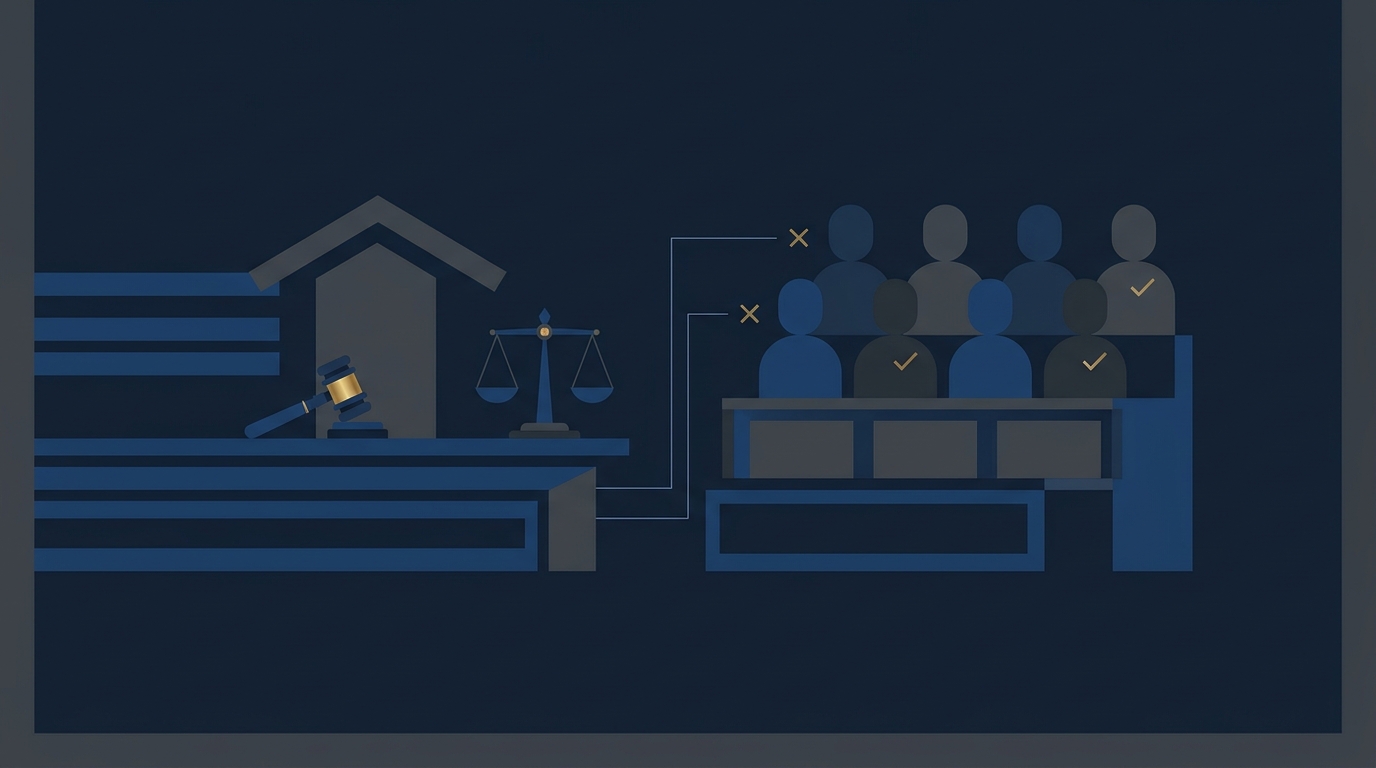
The single most useful technique under a hard cap is the branching question — a neutral gateway followed by conditional follow-ups, structured so that a juror cannot end the inquiry with a reflexive, socially desirable "no."
- Gateway: "Have you, a close family member, or someone in your household ever had a significant experience with [institution or event relevant to the case]?"
- If yes: "What was that experience, without discussing anything the court has ruled should remain private?"
- Relevance: "Would that experience make it harder to evaluate testimony or evidence from [relevant category] fairly?"
- If uncertain: "What would you need to hear from the court or counsel to decide this case impartially?"
- Remediation: "Would you disclose that concern to the court if it arose during deliberations?"
This sequence moves deliberately from disclosure, to relevance, to functional impartiality, to remediation. Each step is a separate record entry — meaning if the court cuts you off after step two, you still have something concrete, rather than a single compound question that produced one conclusory answer. Just as important, this structure creates a record of whether the juror acknowledged difficulty, rather than a record of whether the juror gave a polite assurance of fairness. A juror who says "I could be fair" after a leading, compound question is far less useful on appeal or at the cause-challenge bench conference than a juror who worked through the branch and landed on "I'm not sure I could set that aside."
Questionnaire-only voir dire as an issue-spotting instrument
When oral voir dire is replaced or supplemented by written questionnaires, treat the instrument as a screening tool, not a substitute for follow-up. The information it produces is only as good as the triage you apply to it immediately after collection.
This matters because attorney-led follow-up appears to elicit more candid disclosure than judge-led follow-up on the same underlying question. In one experimental study involving 116 jury-eligible citizens, participants changed their answers nearly twice as often when the follow-up questioning was conducted by a judge rather than by an attorney.[6] The likely mechanism is familiar to any trial lawyer: jurors read a judge's authority differently than an advocate's, and that difference can suppress the very disclosure voir dire exists to produce.
%27%7D%2Cscales%3A%7ByAxes%3A%5B%7BscaleLabel%3A%7Bdisplay%3Atrue%2ClabelString%3A%27Relative%20rate%20(attorney-led%3D1)%27%7D%7D%5D%7D%7D%7D) Relative rate at which jury-eligible participants changed their answers under judge-led versus attorney-led follow-up questioning, based on a 116-participant study.[6]
Given that gap, the practical protocol is to rank every questionnaire answer immediately into four buckets: apparent cause issue, follow-up required, peremptory relevance, and no action. For any answer in the first two buckets, request individual or sidebar questioning where public disclosure in open court might chill candor — particularly on topics like victimization, mental health treatment, or distrust of law enforcement. If that request is denied, state on the record that the restriction prevents meaningful evaluation of cause, and renew the request before challenges are exercised, not after.
The record you ultimately want preserved includes: the written questionnaire answer, the proposed follow-up question, the court's ruling on that request, the juror's response if one was obtained, any objection, and the resulting challenge. A short, legally mapped inquiry that connects directly to tiers 1–3 above is worth more at the bench and on appeal than exhausting a numerical quota of questions that were never likely to move a lawful strike.
Perspective across practice areas
Plaintiff's counsel in civil cases often face caps aimed at preventing early argument through voir dire. Under a limit, prioritize tier 2 and tier 3 questions tied to damages skepticism or tort reform attitudes directly implicated by the case theory, rather than general biography.
Criminal defense counsel should treat tier 1 and tier 2 — presumption of innocence, burden of proof, and relationships to law enforcement — as non-negotiable under any cap, since these go directly to constitutional fair-trial guarantees and are the questions most defensible on the record if the court tries to exclude them.
Corporate defense counsel in civil matters frequently see caps imposed to control trial length. Here, the branching technique is especially valuable for surfacing anti-corporate sentiment without inviting a reflexive denial, since a single well-sequenced question can do the work of several blunt ones.
Prosecutors operating under a cap should prioritize tier 1 structural disqualification and tier 2 inability to apply the burden of proof as instructed, since failing to catch a juror who cannot follow the reasonable-doubt standard is a risk that compounds through the entire trial.
FAQ
What should I do first if the judge announces a strict time or question cap right before jury selection? Immediately identify which of your prepared questions fall into tiers 1 and 2 of the hierarchy above — structural disqualification and cause-based bias — and plan to ask only those unless time remains. Submit any questions you cannot fit in writing and ask the court to pose them, consistent with the mechanism contemplated by Rule 24 and similar state rules.[1]
Can a judge refuse to ask any of my proposed questions at all? Generally yes, trial courts have broad discretion over voir dire procedure. The limits on that discretion arise when a restriction prevents counsel from adequately discovering disqualifying bias, which is why a specific, contemporaneous objection explaining the connection between the question and impartiality is important to preserve the issue.
Is questionnaire-only voir dire a complete substitute for oral follow-up? No. A questionnaire is best treated as a screening instrument that identifies which jurors need follow-up, not as a final answer on impartiality. Research suggests attorney-led follow-up can elicit more candid responses than judge-led follow-up on the same topic, which supports requesting at least limited oral follow-up on flagged answers.[6]
How many questions should I plan to ask under a hard cap? There is no fixed number — the right approach is to rank available questions by legal consequence and ask as many tier 1 and tier 2 questions as time allows before spending any remaining time on tiers 3 through 5.
What is the difference between a cause challenge and a peremptory challenge in this context? A challenge for cause is unlimited in number but requires a specific legal basis, such as inability to be impartial or a statutory disqualification. A peremptory challenge is limited in number and may generally be exercised without stating a reason, subject to constitutional limits on discriminatory use.[4]
A practical note on preparation
None of this triage happens well in the moment if it has not been planned beforehand. Attorneys increasingly use structured preparation tools — including AI-assisted platforms like StrikeList AI — to pre-rank candidate questions by legal consequence and draft branching sequences before they ever walk into a courtroom with a time cap already announced. The judgment calls about cause, relevance, and record-building still belong to counsel; the value of preparation tools is in making sure that judgment is applied before time runs out, not during it.
This post is intended as general practical commentary on voir dire procedure and does not constitute legal advice. Always consult the governing rules and case law of your specific jurisdiction before relying on any procedural strategy described here.
Notes
- Federal Rules of Criminal Procedure, Rule 24(a), Legal Information Institute, Cornell Law School, https://www.law.cornell.edu/rules/frcrmp/rule_24
- Cornell Law School Legal Information Institute, "Peremptory Challenge," Wex, https://www.law.cornell.edu/wex/peremptory_challenge
- Study on juror disclosure rates under judge-led versus attorney-led voir dire questioning (116 jury-eligible participants), as cited in trial practice research on voir dire candor.
See how StrikeList AI fits your next trial.
Buy a single trial and start today, or request a short demo to see the workflow on a real panel.