A race-neutral explanation survives a Batson challenge when it is a contemporaneous, specific account of how you evaluated that particular juror, tied to something the juror actually said or did. It fails when it's a post hoc label like "demeanor," "occupation," or "life experience" dropped in after the fact with no record to back it up. Courts don't credit categories. They credit specifics, and increasingly they test those specifics against how you treated other jurors who gave similar answers. That comparative check is where most Batson responses actually fall apart.
The governing framework comes from Batson v. Kentucky, 476 U.S. 79, 96-98 (1986): a prima facie showing, a race- or gender-neutral explanation, and then a credibility determination weighing all the evidence bearing on discriminatory purpose.[1] Lawyers spend a lot of time on steps one and two. Step three is where cases get won or lost, and it's the step most trial lawyers haven't actually practiced for before they're standing up mid-voir dire trying to explain a strike on the spot.
Why a Batson Challenge Response Needs More Than a Category
Saying a juror had a "bad attitude" or "seemed distracted" isn't an explanation, it's a conclusion. Judges hearing a Batson challenge aren't looking for a label that technically isn't about race or gender. They're looking for a chain of reasoning: what did the juror say, why does that matter to this case, and would you have struck anyone else who said the same thing.
The explanation has to identify the specific feature of that juror's answer, not the demographic group and not an abstract category sitting on top of it. Courts will accept hostility toward law enforcement, a prior prosecution in the family, hardship, views about punishment, or an inability to follow instructions as legitimate bases for a strike. But naming the category and stopping there proves almost nothing. "Law enforcement bias" means nothing without the sentence the juror actually said that created it.
The Four Facts to Record Before You Strike
Before you exercise a peremptory strike that could draw a Batson challenge, get four things down, ideally in your own notes during voir dire, not reconstructed afterward:
The juror's precise answer or conduct. Quote it or summarize it accurately, and include the question that produced it. "Juror 12 said she would require corroboration before crediting an officer's testimony" is useful. "Juror 12 seemed skeptical" is not.
The legitimate concern. Explain why that answer matters to impartiality, comprehension, availability, or how the juror will function in deliberation.
The connection to the case. Tie the concern to something actually in dispute: a contested witness category, a defense theory, a piece of evidence, or even trial logistics like the length of the trial and the juror's stated hardship.
The comparative baseline. Note whether other jurors gave materially similar answers, and if you kept one of them, be ready to explain why. This is the piece most lawyers skip, and it's the piece judges now check first.
A workable formulation looks like this: "I struck Juror 12 because she stated that a close relative was recently prosecuted for the same offense, expressed continuing distrust of law enforcement, and said she would require corroboration before crediting an officer. Juror 8 also reported a relative's prosecution, but said the experience would not affect her evaluation of police testimony and affirmed that she could follow the court's instructions." That's a comparison a judge can actually test against the record, because it names the distinguishing fact rather than asserting that the two jurors just weren't comparable.
Pretext-Proofing the Record Before the Objection Is Made
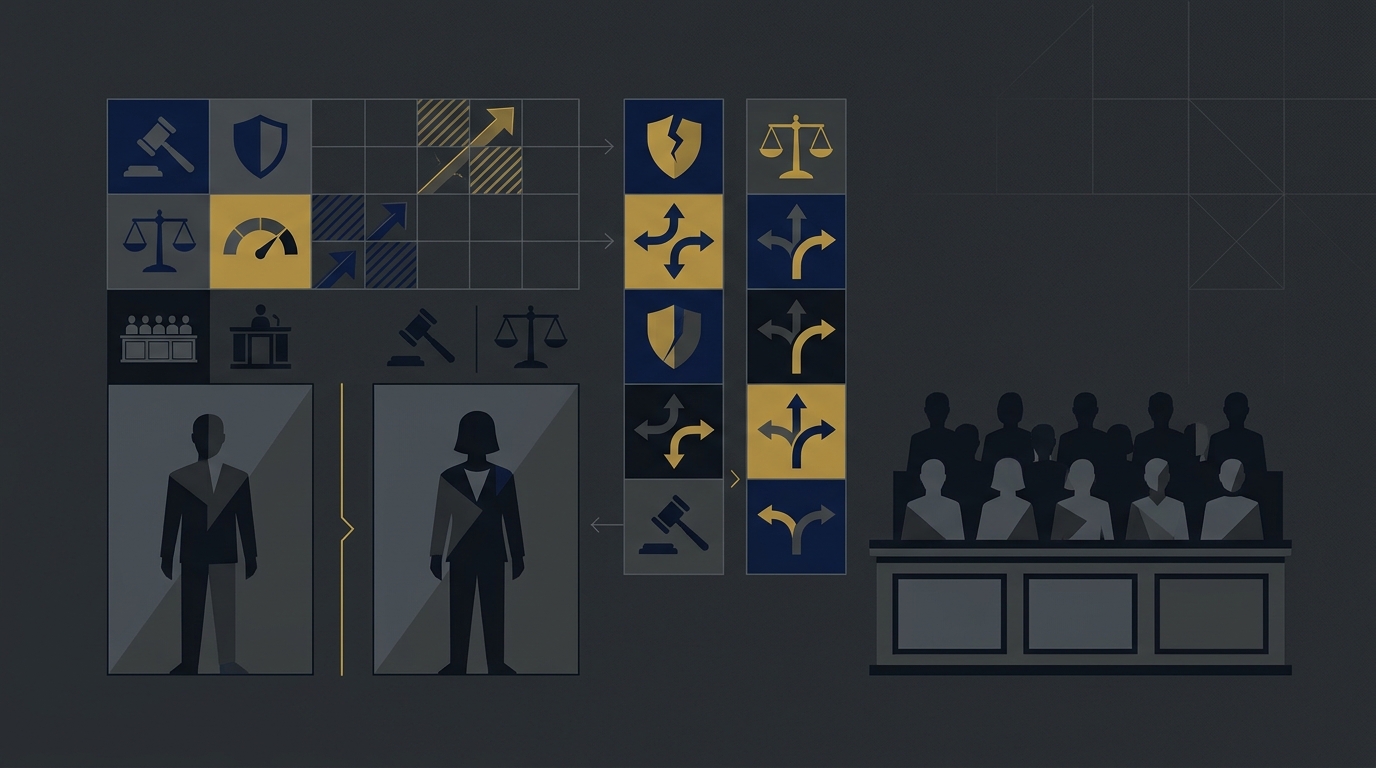
Comparative juror analysis is often the deciding factor at step three. In Miller-El v. Cockrell, 537 U.S. 322, 342 (2003), and Miller-El v. Dretke, 545 U.S. 231, 241 (2005), the Supreme Court walked through side-by-side comparisons of struck minority jurors against accepted nonminority jurors, and the mismatches in the prosecutor's stated reasons were what undid the strikes. The Court relied on the same comparative method in Foster v. Chatman, 578 U.S. 488 (2016), and again in Flowers v. Mississippi, 588 U.S. 284 (2019).[5] If your explanation can't survive someone pulling the voir dire transcript and lining up every juror who answered the same question, it's not going to survive step three either.
A few habits protect the record before the objection ever gets made:
Apply the same concern consistently across the whole venire, not just to the juror being struck. If you're worried about distrust of police, ask every juror about it, not just the ones you're already inclined to strike.
Explain meaningful differences instead of waving your hand and saying two jurors weren't comparable. "Not comparable" without a reason is exactly the kind of conclusory statement that invites a finding of pretext.
Avoid shifting rationales. If the reason you give at step three wasn't in your notes and wasn't mentioned when the strike was made, and a different or additional reason shows up only after the objection, that looks like pretext because it often is.
Be careful with demeanor-based strikes. Demeanor is a permissible basis, but only if the record describes the observable conduct and the judge independently confirms seeing it. "He looked uncomfortable" without the judge's own observation on the record is a thin reed.
Preserve everything: the questionnaire, juror notes, the seating chart, the order strikes were used in, and the full acceptance history. If a challenge comes months later on appeal, this is the only record anyone will have.
State plainly whether the strike rests on one concern or a combination, and name each one. A combined rationale that's internally consistent is stronger than a single reason stretched to cover more than it can hold.
The Batson Challenge Standard Applies the Same Way to Gender
J.E.B. v. Alabama ex rel. T.B., 511 U.S. 127 (1994) extended the same three-step framework to gender-based strikes. The temptation in gender-based objections is to reach for a gender-coded assumption dressed up as neutral: women are more sympathetic, men lean prosecution. Those assumptions don't survive step three any better than a race-coded one does. The fix is identical to the race context: individualized answers from that specific juror, and documented distinctions from jurors you kept who gave different answers to the same questions.
From the Prosecution's Chair
Prosecutors facing a Batson challenge carry the same burden civil and defense lawyers do, but the stakes run differently because an improperly stricken juror can taint a conviction on appeal years later, as Foster shows. The practical lesson from Foster is that a prosecutor's own case file, if it shows jurors flagged or ranked by race, becomes the exhibit that defeats the stated neutral reason. Keep notes clean and keep them about the substance of each juror's answers, not shorthand that could read as coded later.
From the Criminal Defense Side
Defense counsel raising a Batson challenge should build the comparative chart themselves before the objection, not rely on the prosecutor to volunteer the comparison. Flowers came after six trials of the same defendant and a documented pattern of the same prosecutor striking Black jurors at a dramatically higher rate than white jurors. Patterns across proceedings, not just within one, can matter when the same lawyer or office has a track record in front of the same judge.
From the Plaintiff's and Corporate Defense Perspective in Civil Trials
Batson and its progeny apply in civil cases too, through Edmonson v. Leesville Concrete Co., which extended the doctrine to civil litigants. Plaintiff's counsel and corporate defense counsel both face the same step-three scrutiny over strikes based on attitudes toward damages, prior litigation experience, or employment in an industry related to the case. "She works in insurance claims" is a category. "She said her job handling claims for twelve years makes her start from the assumption that plaintiffs exaggerate injuries" is a specific, record-grounded reason a judge can actually weigh against a juror you kept who said claims experience wouldn't affect her view.
FAQ
What happens if the judge finds the explanation is pretextual? The court denies the strike, seats the juror, or in some jurisdictions fashions another remedy such as reconstituting the panel. A finding of purposeful discrimination can also be raised on appeal and, in criminal cases, can result in reversal of a conviction, as in Foster v. Chatman.
Does demeanor alone ever satisfy step two? Demeanor can be a legitimate basis, but courts increasingly require that the specific conduct be described on the record and, where possible, confirmed independently by the trial judge rather than accepted solely on the striking party's say-so.
How many comparator jurors do I need to identify? There's no fixed number. The analysis in Miller-El and Flowers focused on whichever retained jurors gave materially similar answers to the stricken juror. The goal is to account for every juror who answered the relevant question similarly, not to hit a quota.
Can a combination of reasons support a strike even if one reason alone wouldn't? Yes, courts have accepted that multiple independently legitimate concerns can together justify a strike. The explanation should identify each concern separately rather than blending them into a vague composite.
Does this framework apply outside race and gender? The Batson line has been extended to gender under J.E.B. Some jurisdictions and practitioners have debated extending it further, but race and gender remain the settled categories at the Supreme Court level addressed here.
Closing Note
None of this guarantees a particular ruling. Step three is a credibility call for the trial judge, and judges weigh the same record differently. What a lawyer controls is the quality of the record built before the strike is ever challenged: the specific answer, the stated concern, the tie to the case, and the comparison to who stayed in the box. That's also the kind of record that's hard to build from memory three strikes later, which is part of why firms have started using tools like StrikeList AI to keep juror notes and comparative data organized in real time during voir dire, so the explanation is already sitting on the page when the objection comes.
Notes
- Batson v. Kentucky, 476 U.S. 79, 96-98 (1986), U.S. Supreme Court.
- Miller-El v. Cockrell, 537 U.S. 322, 342 (2003), U.S. Supreme Court.
- Miller-El v. Dretke, 545 U.S. 231, 241 (2005), U.S. Supreme Court.
- J.E.B. v. Alabama ex rel. T.B., 511 U.S. 127 (1994), U.S. Supreme Court.
- Foster v. Chatman, 578 U.S. 488 (2016), U.S. Supreme Court; Flowers v. Mississippi, 588 U.S. 284 (2019), U.S. Supreme Court.
See how StrikeList AI fits your next trial.
Buy a single trial and start today, or request a short demo to see the workflow on a real panel.