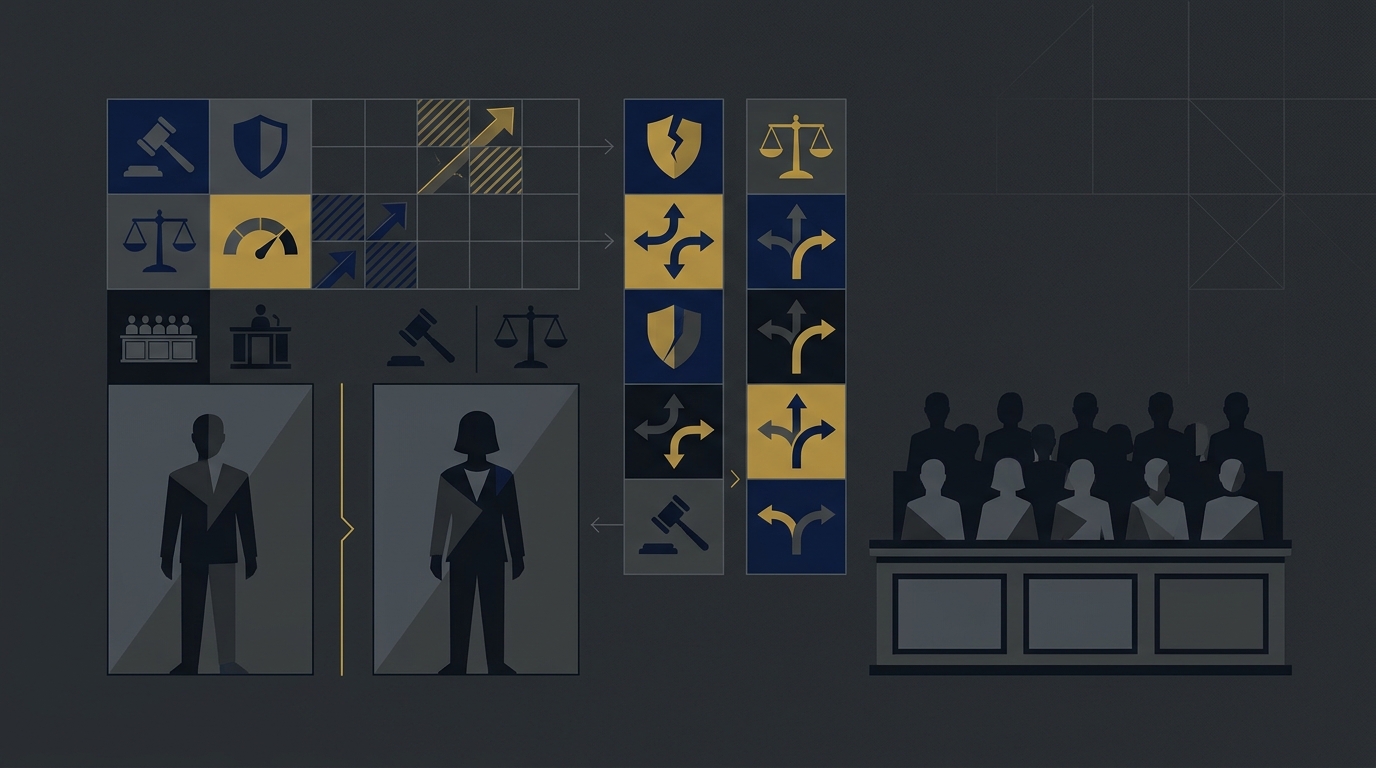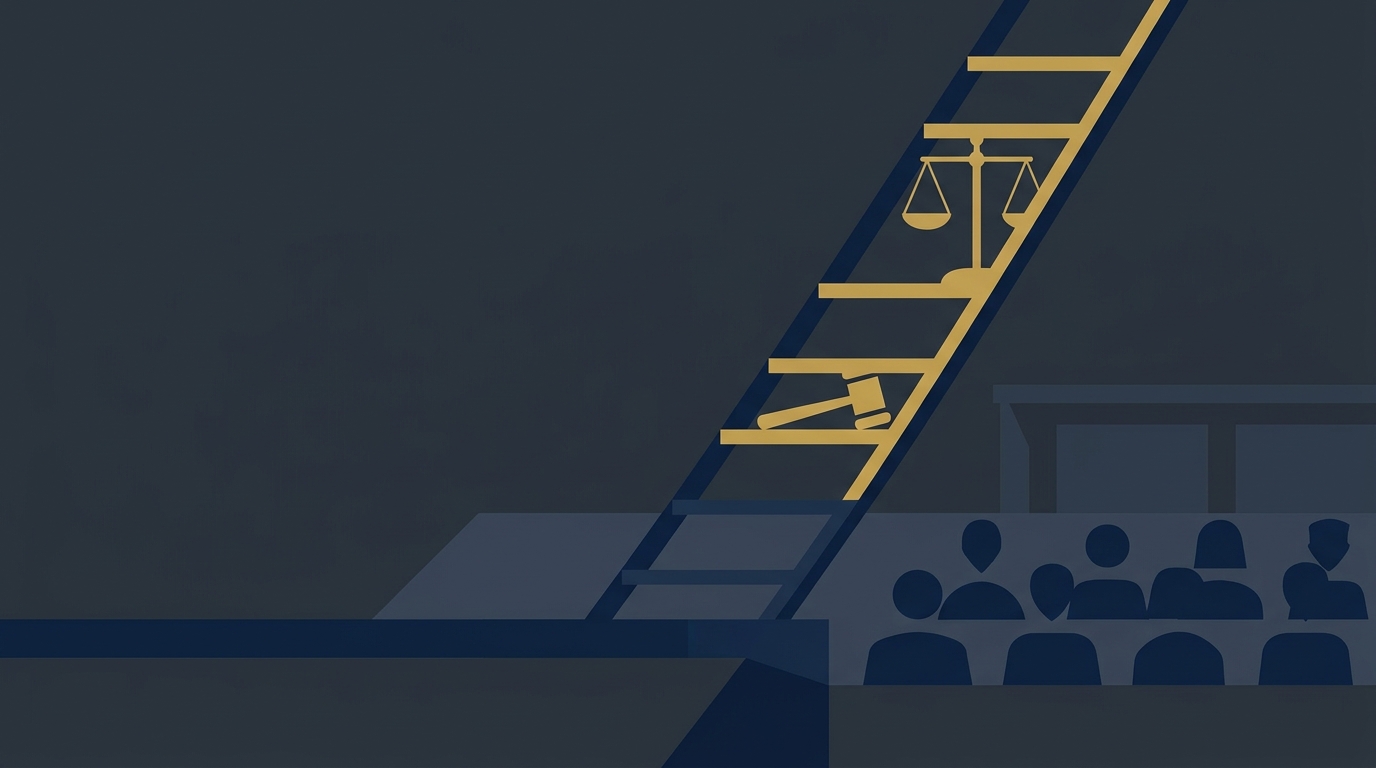
If you want useful answers about implicit bias, stop asking jurors whether they can be fair. Ask instead how often a reaction shows up, how strong it is, and when they last noticed it. That shift, from an abstract label to a behavioral sequence, is the core of a strength-and-frequency question ladder: lived experience, salience, strength, frequency, recency, application, then control. It gives you a record you can actually use for a cause challenge, a rehabilitation fight, or an appeal, instead of a juror's promise that they'll "try to be fair."
Most lawyers already sense the problem with the direct approach. Ask a panel "can everyone here judge a police officer's testimony fairly regardless of race," and you get a room full of nodding heads. Nobody raises a hand to admit they can't be fair. You haven't learned anything, and you've spent your limited voir dire time asking a question that functions more like a loyalty oath than a diagnostic tool.
Why the direct bias question fails
The instinct to ask jurors to self-classify as biased or unbiased runs into a basic problem: it forces people to apply a stigmatizing label to themselves in front of strangers, a judge, and the person they might convict or acquit. Nobody volunteers for that. Courtroom research on how attorneys actually question panels found that bias-oriented inquiries are usually indirect, and that indirect questioning substantially outweighs direct references to bias in practice.[1] Lawyers who do this well aren't asking "are you biased." They're asking about specific experiences and letting the jurors' own answers reveal the relevant information.
That doesn't mean self-report is worthless. A venire study found that jurors who acknowledged a pretrial-publicity bias were more likely to convict than jurors who reported impartiality, which suggests candid answers can carry real predictive value when the question is framed to invite a candid answer rather than a defensive one.[5] The lesson isn't to abandon self-report. It's to stop asking jurors to pass judgment on their own character and start asking them to describe what they notice, how often, and how recently.
The goal of implicit-bias voir dire is never to prove a juror harbors some generalized, abstract bias. It's to find out whether a specific experience or attitude could affect how that juror weighs a witness, a party, a police officer, an expert, or a defense theory in this case. That's a narrower, more answerable question, and it's the one the ladder is built to ask.
The strength-and-frequency ladder for implicit bias voir dire
Before you use the ladder, identify the legally relevant category at issue in your case: race, immigration status, gender identity, drug use, poverty, law enforcement, disability, or whatever feature of your case is likely to trigger an attitude that affects evaluation of the evidence. Then work through the sequence.
Step one: lived experience
Start concrete and neutral. "Have you had personal, family, professional, or community experiences involving [group or issue]?" Follow up with "what stands out about that experience?" This isn't an invitation to confess bias. It's an invitation to tell a story, which most jurors will do more readily than they'll answer a yes-or-no question about fairness.
Step two: salience
"When [issue] arises, how much attention does it usually receive from you? Little, some, or a great deal?" This measures practical salience, how much the issue actually occupies the juror's thinking, without demanding any moral conclusion about whether that attention is appropriate or fair.
Step three: strength
"How strongly do you tend to agree with the view that [case-specific proposition]?" Use a numeric scale, zero to ten, rather than words like "biased" or "not biased." A scale gives you a number you can compare across the panel and cite later if you move for cause. It also lets a juror land somewhere other than an all-or-nothing extreme, which tends to produce more honest answers.
Step four: frequency
"How often do you find yourself having that reaction? Rarely, sometimes, often, or nearly always?" This is the step that converts a generalized attitude into something closer to a predictable trial behavior. A juror who says "often" is telling you something meaningfully different from a juror who says "rarely," even if both agreed with the same proposition in step three.
Step five: recency
"When was the last time you noticed that reaction?" An attitude the juror hasn't thought about in fifteen years carries different weight than one that came up in a conversation last week. Recency helps you and the court separate a dormant belief from an active one that's more likely to surface during deliberations.
Step six: application
"If a witness or defendant in this case fit that description, what effect, if any, might that reaction have on how you evaluate credibility or evidence?" This is where you tie the abstract pattern directly to a decision point in your trial. It's also the question most likely to produce language you can quote in a motion.
Step seven: control and remedy
Ask what would help the juror evaluate the evidence fairly, then ask the question that actually matters for cause purposes: "Can you follow the court's instruction even if that reaction occurs?" A juror who can't answer that question, or who answers it with visible hesitation, has given you something concrete to point to.
Building an admissible record on implicit bias in voir dire
Every question in the ladder should tie back to a specific decision point in your case: credibility, perceived dangerousness, memory, consent, damages, reasonable fear, or the reliability of police testimony. Don't ask jurors to diagnose themselves as racist, sexist, or implicitly biased. Ask for observable reactions, comparative judgments, and the juror's own prediction about how an attitude might affect deliberation. That framing survives objection better and reads better on a cold transcript.
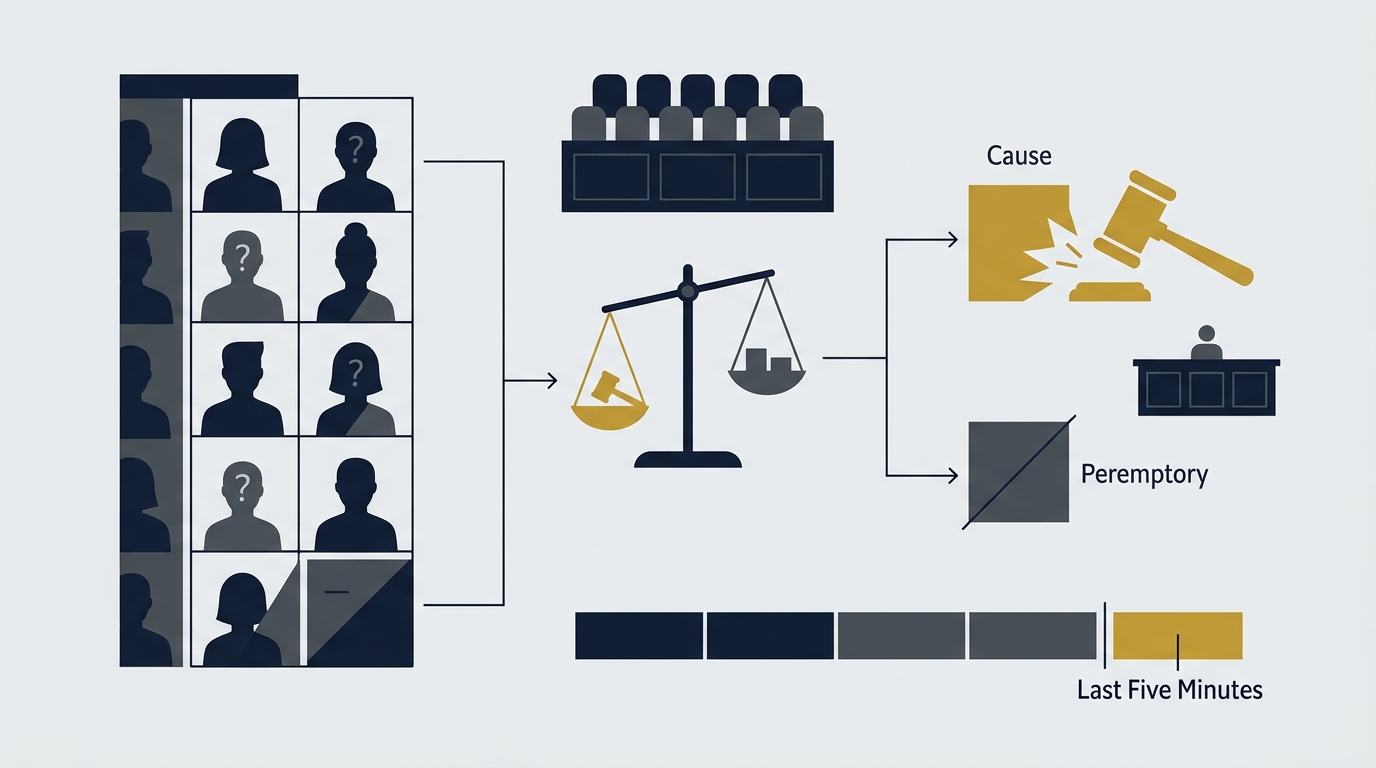
When an answer surfaces a sensitive experience or a potential cause ground, request individual questioning outside the presence of the rest of the panel. You don't need an outright admission of bias to support a cause challenge. A juror's inability to explain how they would control a stated reaction can itself support a challenge for cause under the applicable jurisdiction's standard, which is a lower bar than waiting for someone to say "I can't be fair."
Why this matters beyond the strike itself
The constitutional backdrop here is not abstract. Batson v. Kentucky, 476 U.S. 79 (1986), prohibits race-based peremptory strikes, and J.E.B. v. North Carolina, 511 U.S. 127 (1994), extends that prohibition to gender.[2] Those cases mean the record you build during voir dire matters on both sides of the aisle: a specific, behavior-based explanation for a strike survives scrutiny in a way that a vague "bad feeling" does not.
The stakes extend past jury selection itself. In Pena-Rodriguez v. Colorado, 580 U.S. 206 (2017), the Supreme Court held that the no-impeachment rule protecting the secrecy of jury deliberations must yield when a juror makes a clear statement that racial stereotypes or animus contributed to a criminal conviction.[2][6] That holding is a direct argument for doing this work during voir dire rather than hoping to clean it up after a verdict. If a biased attitude surfaces during deliberations with no record of it having been probed beforehand, you're relying on a juror to come forward after the fact, which is a much harder path than developing the evidence when you had the chance.
The ladder from each side of the courtroom
For plaintiff's counsel, the ladder is most useful on attitudes toward damages and credibility of pain or disability. A juror's frequency and recency answers about skepticism toward injury claims can separate a juror who's mildly skeptical from one who's effectively decided the case already.
For criminal defense, the ladder does its heaviest work on attitudes toward police testimony and toward the defendant's background, including drug use or prior contact with the system. A juror who rates high strength and high frequency on automatic deference to police testimony is a different juror than one who scores low on both, even if both initially say they can be fair.
For corporate defense, the useful target is often attitudes toward large companies, wealth, or corporate responsibility generally. The strength scale in particular tends to separate jurors who hold a mild, general skepticism from those who've already formed a strong, frequent reaction that no instruction is likely to change.
For prosecutors, the ladder works both directions: it can surface a juror predisposed to disbelieve police testimony, and it can also surface a juror predisposed to disbelieve a defendant's version of events regardless of the evidence. Either extreme is worth identifying before the case is in the jury's hands rather than after.
FAQ
Does this approach replace the standard "can you be fair" question? No. Courts generally still require some version of the fairness question, and many judges ask it directly. The ladder works alongside it by giving you specific, case-tied answers to point to if a juror's fairness assurance seems inconsistent with what they said earlier about strength, frequency, or recency of a particular reaction.
What if a juror refuses to engage with the strength scale? Move to a comparative question instead, such as asking whether the juror feels more strongly, less strongly, or about the same as most people they know on the issue. The goal is a usable data point, not forcing a precise number out of someone who's uncomfortable giving one.
Is this method only useful for criminal cases? No. The ladder applies anywhere a juror's attitude toward a group, a profession, or an issue could affect how they weigh evidence, including civil cases involving corporate defendants, medical providers, or injury claims. The categories change; the sequence doesn't.
Can answers from this ladder support a Batson response as well as a cause challenge? Yes. Because the questions generate specific, case-tied reasons tied to observable answers rather than a juror's demographic category, they give counsel a race-neutral or gender-neutral explanation grounded in the record itself, which matters directly under Batson and J.E.B.
Does asking about frequency and recency risk reminding jurors of biases they'd rather not discuss? The risk is smaller than it looks, because the questions ask about the juror's own observed patterns rather than asking them to adopt a label. Framing matters: asking "how often do you notice that reaction" invites description, while asking "are you biased" invites denial.
Closing thought
None of this requires a lecture on implicit bias as a concept, and it shouldn't come across as one. Jurors respond to specific questions about their own experience better than they respond to being asked to grade their own character. Lawyers who build this ladder into their voir dire outline tend to walk away with a transcript that actually says something, rather than a page of unanimous assurances that everyone in the room can be fair.
At StrikeList AI we spend a lot of time thinking about how to turn voir dire answers into a record that holds up, not just a gut feeling about who to strike. Tools that help organize juror responses by category and flag inconsistent answers across the panel can make this kind of structured questioning easier to execute under the time pressure of actual jury selection.
Notes
- Research on courtroom questioning patterns regarding bias-oriented voir dire, cited as study [1] in the source research for this article.
- Batson v. Kentucky, 476 U.S. 79 (1986) (U.S. Supreme Court, decided April 30, 1986); J.E.B. v. North Carolina, 511 U.S. 127 (1994) (U.S. Supreme Court, decided April 19, 1994); Pena-Rodriguez v. Colorado, 580 U.S. 206 (2017) (U.S. Supreme Court, decided March 6, 2017).
- Venire study on self-reported pretrial-publicity bias and conviction rates, cited as study [5] in the source research for this article.
- Research discussing Pena-Rodriguez v. Colorado and the no-impeachment rule, cited as source [6] in the source research for this article.
- Research on indirect versus direct bias questioning in courtroom voir dire, cited as source [7] in the source research for this article.
See how StrikeList AI fits your next trial.
Buy a single trial and start today, or request a short demo to see the workflow on a real panel.